






News
Forthcoming Events
Previous News Items
Past News Items and working party updates can be viewed by clicking HERE.
Dates For Your Diaries, a number of events throughout the coming year.
Previous news items / working party updates can be viewed by clicking HERE
A dedicated team of nine volunteers met up at the Hartley Lane car park this morning, ready to take on the day's tasks despite a damp start at 19°C.
Unfortunately, the weather had other plans for us! The rain picked up so heavily that we eventually had to call the session off early for safety and comfort.
However, our hard-working team still managed to squeeze in a fantastic amount of progress before the downpour got the better of us.
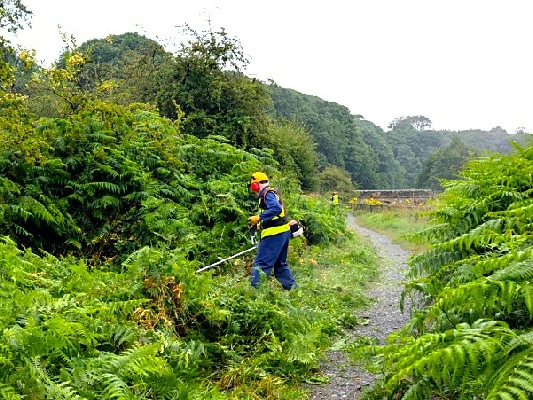
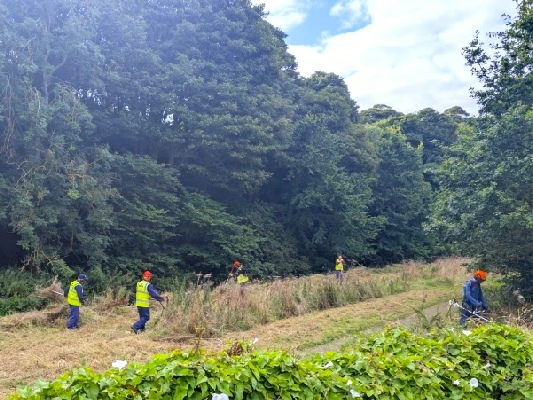
We successfully strimmed the main paths leading from the car park past the dipping pond all the way to the stile at the stone bridge. We also managed to clear the path heading out from the car park towards the estuary.
Photograph A. Strimming verges
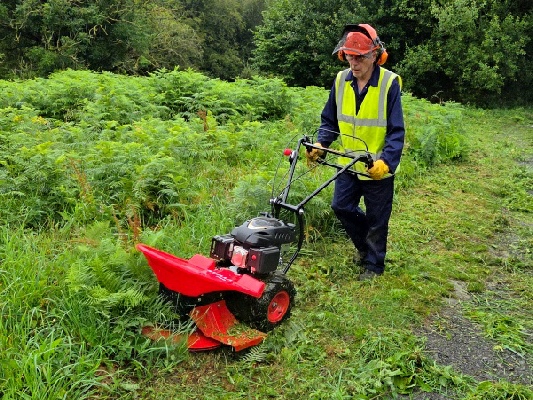
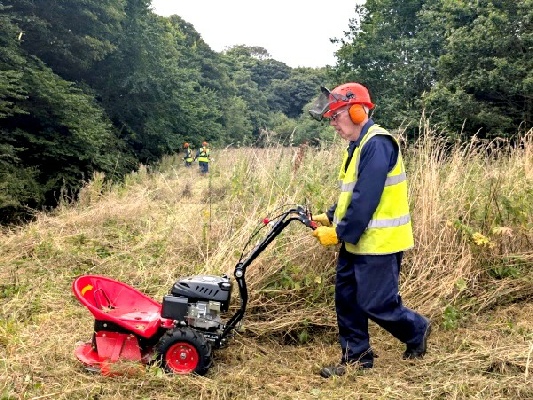
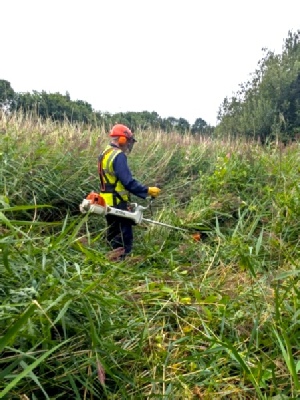
Oh, by the way, we have invested some of our funds in a new labour-saving device: a rough cutter. It is petrol-powered, is pushed like a lawnmower and will cut rough vegetation such as pathside weeds and bracken. Here it is in action.
Photograph B. Rough cutter in action
This will do some jobs quicker than a strimmer and will be useful particularly for area strimming and mowing the meadow.
A massive thank you to the nine brave souls who braved the wet weather today to keep the Dene’s paths clear!
We’ll be back for more adventures next week!
A small party of five volunteers met at the west end of Seaton Delaval for a morning of balsam bashing.
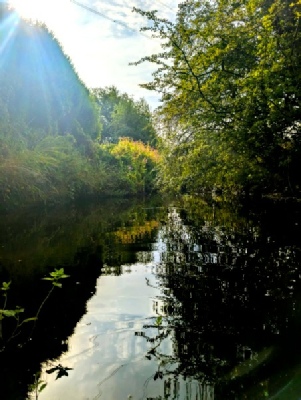
We split into two groups, the first group of three started at the “Newburgh Avenue” stone bridge working upstream. Meanwhile the second group walked up towards Seghill to where we finished last week, entered the water and worked downstream to meet the first group.
Both groups pulled a large number of plants, many in seed and some unfortunately already seeded, however in total a massive amount of seeds have been prevented from entering the watercourse.
The burn in that area is a big challenge to negotiate with many blockages, overhanging branches, massive vegetation growth and underwater obstructions, however the two groups eventually met up and we finished slightly early and headed home for a well earned rest.
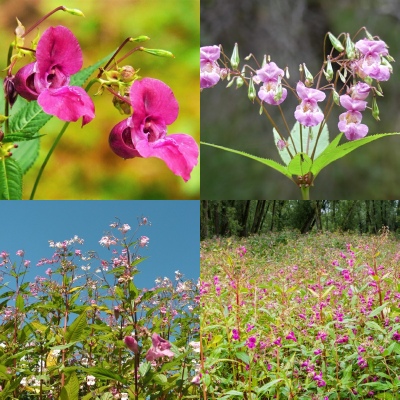
Just in case you want to know what Himalayan balsam looks like, here’s a composite illustration.
Photograph A. What Himalayan balsam looks like
A great turnout of ten volunteers met up at the car park in Mare’s Close, Seghill, this morning for another highly productive session tackling Himalayan balsam. The weather was bright and warm, reaching 22°C.
To cover as much ground as possible, we split into two teams. The first team of four set out to tackle a massive infestation of at least 1,000 balsam plants on the Seaton Burn near Seghill. We initially attempted to reach them by wading through the burn, but that section turned out to be incredibly deep and unsafe to traverse.
Photograph A. Deep pool on burn
Thankfully, we were kindly granted permission to cross private land instead, allowing us to safely reach the site and clear the huge patch.
Photograph B. Tackling a huge patch of over 1,000 balsam plants
Meanwhile, the second group focused their efforts on the old Seghill Nature Reserve. They divided into two subgroups, one of which continued from where we left off last week, systematically pulling balsam on the west side of the lake. Meanwhile the other subgroup worked around the lake in the opposite direction, along the south side The two met up near the inlet culvert under the railway line.
Photograph C. Clearing balsam amongst tall lakeside vegetation
So, we’ve cleared the old nature reserve and part of the Seghill end of the Seaton Burn, but there’s still more to be done.
Thanks to the combined efforts of both teams—and the kind cooperation of local landowners—it was a fantastic and very productive day for the Dene!
We’ll be back for more adventures next week!
A group of eleven volunteers met up at the Northumbrian Water pumping station this morning for a session focused on essential trail repairs and accessibility. We were treated to a pleasant, dry, and sunny day with a light breeze and comfortable temperatures around 18°C.
Our main focus today was tackling some much-needed maintenance on local infrastructure. To that end, we divided into three groups.
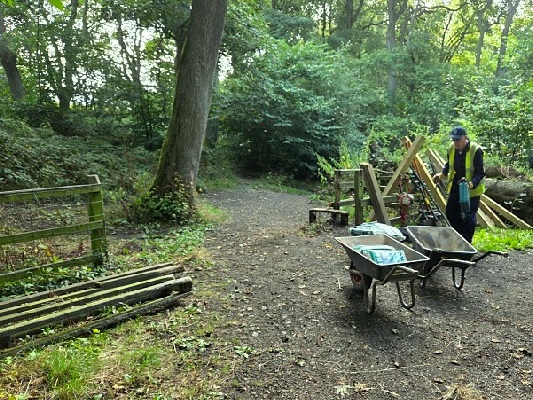
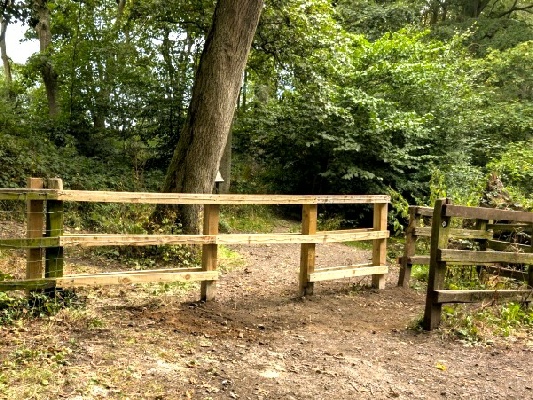
The main group addressed a damaged fence. This is the section of fencing, including a stile, at the top of the steps that take you up from the river level to the north end of the embankment.
The fence had been knocked down by vandals, so we decided to build it back stronger and convert the stile into a narrow gateway, making the route far more accessible! The fence-posts are now sunk 0.8 metres deep into the ground and concreted in.
Photograph A. Fence and stile before repairs
Photograph B. After repairs
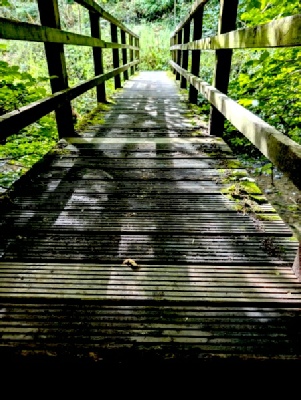
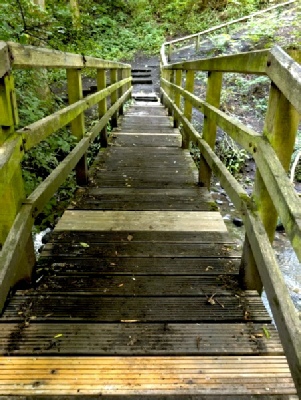
A second, smaller, group carried out temporary repairs on the two mid-Dene footbridges – replacing broken treads, mainly. These bridges fall under North Tyneside Council’s responsibility, and we have reached out numerous times to them for assistance to no avail so far, so our temporary fixes are designed to do no more than ensure they remain safe and usable for visitors in the meantime.
Photograph C. Upstream footbridge after repairs
Photograph D. Downstream footbridge after repairs
The third activity today was strimming. Only one strimmer was deployed but we managed to get a long stretch of the south-side path cleared of pathside vegetation upstream of the tunnel.
It was lovely working in the Dene today, and great to see so many people out and about enjoying the paths on their bikes in the sunshine.
We’ll be back for more adventures next week!
A strong team of ten volunteers met up by the gate on Hartley West Farm lane this morning, ready to take on one of our major seasonal jobs. The weather was pleasant and ideal for a full day of physical labor, with temperatures around 18°C.
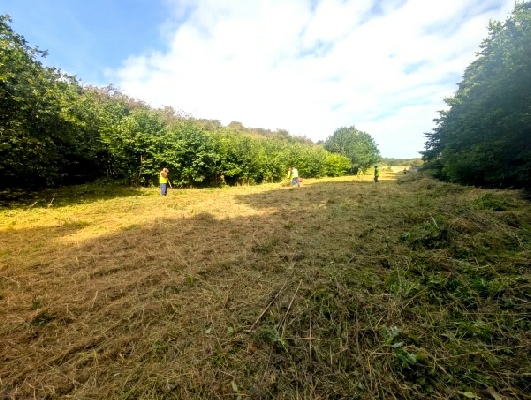
Our main focus for the entire day was strimming the meadow (near the stone bridge). Thanks to some new machinery we’ve recently acquired, the team was able to get stuck in and deliver a fantastic, high-quality result across the whole area.
Photograph A. Hard at work strimming the meadow
Photograph B. Strimming with our new machine
Because of the sheer volume of grass and vegetation cut down, we also had to reorganize our raking system on the fly to keep up with the new pace and handle the workload efficiently. It was a long, full-day effort, but the hard graft paid off, and the meadow is looking brilliant.
Photograph C. The meadow after mowing
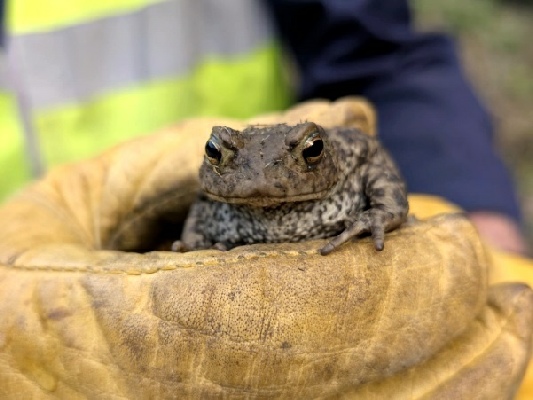
Every year, when we mow the meadow, we are made aware of the fact that lots of creatures enjoy living in the damp conditions between the grasses and weeds. Mice and other rodents are often seen scurrying away; also amphibians. Here is a toad that we encountered today (looking a bit indignant).
Photograph D. Common toad
A massive thank you to all ten volunteers who dedicated their entire day to getting this big job done so thoroughly!
We’ll be back for more adventures next week!
A team of five volunteers met up by the Suez plant in Seghill this morning for a productive few hours of conservation work on the old nature reserve. The weather was mild and comfortable for physical work at 16°C.
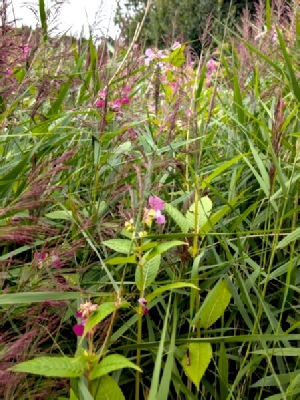
Photograph A. Himalayan balsam
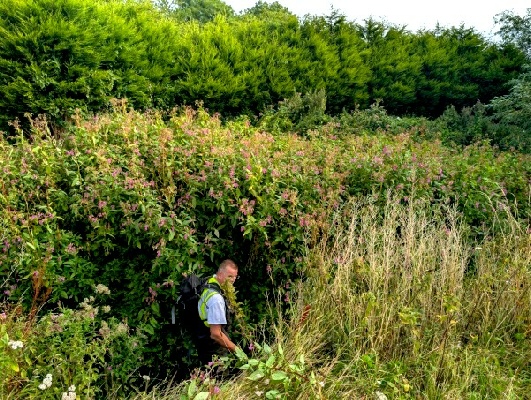
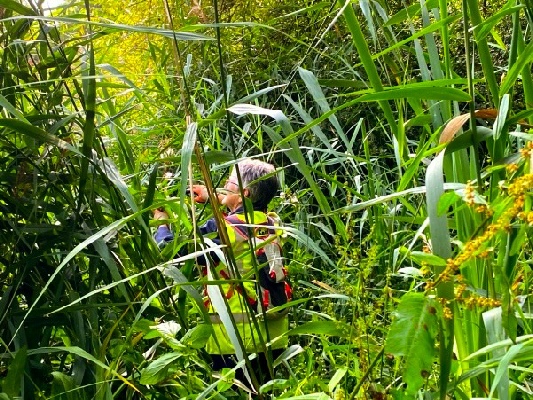
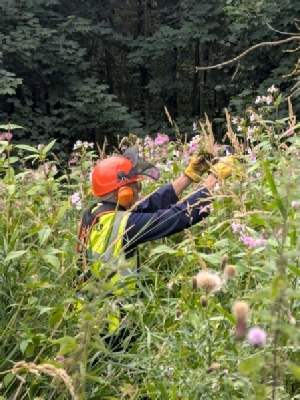
Our main goal today was tackling an immense growth of Himalayan balsam across the reserve. Because the infestation was so heavy, we systematically picked off the seeding flower heads first to prevent them from scattering and bagged them up—filling an impressive five black bin bags! Once the seed heads were safely secured, we strimmed the ground thoroughly to catch all the smaller, non-flowering plants that are so easy to miss in the undergrowth.
Photograph B. Removing seed heads
Photograph C. Strimming
After finishing up on the reserve, we headed under the bridge and got into the water to clear another patch of balsam growing along the stream. While working down in the water, we spotted two plants that were heavily infested with aphids and guarded by a swarm of wasps! Exercising plenty of caution, we managed to navigate around them carefully and safely to complete the job.
Photograph D. Bags of balsam seed heads
It was a fantastic, highly productive session with great results for the reserve!
We’ll be back for more adventures on Tuesday!

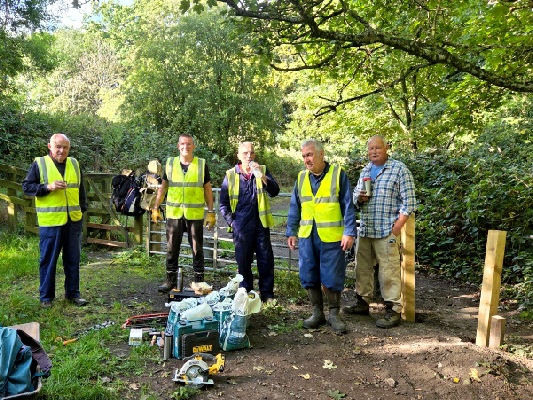
The working party numbered only seven volunteers this morning, mainly because of holidays, although we had a new recruit starting today – many thanks to him for giving up some of his time to look after the Dene! The main task was replacing a damaged fence, with some sycamore- and ivy-bashing on the side – on a bright, warm, breezy day.
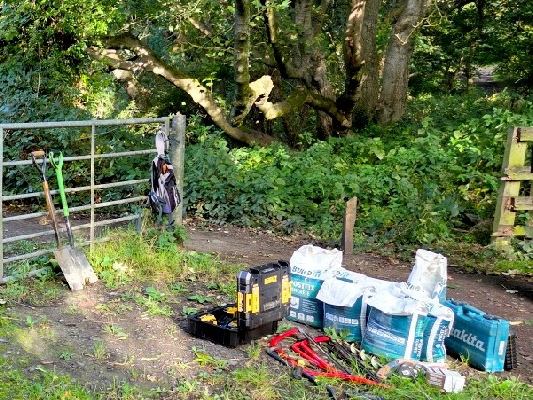
The assembly point was our parking space by the gateway of the Northumbrian Water pumping station down Holywell Lane. There were a lot of tools and materials needed for today’s task, so some of us had to make the trip from the van to the site twice. The site in question was the gate at the southern end of the embankment over the tunnel, which leads to the mountain biking area.
At a rough guess, our young mountain-biking friends don’t like the gate and fence at that point because it makes access difficult, and at a rough guess that’s why it keeps getting damaged. The length of fence right of the gate was the recent victim of their activities.
Photograph A. Fence before work began
Essentially, the task of the day was to replace that piece of fence with something that will hopefully last somewhat longer. We set the fence posts deeply into the ground and fixed them in place with “postcrete”, we doubled up the top two fence bars, and we attached wire to the bars to make them difficult to remove.
Photograph B. The fence-mending team
Photograph C. The finished job
The other activity of the morning – done by two volunteers – was removal of ivy and sycamores. This work was done in the space on the other side of the burn from the mountain-biking area. Well, it turned out that the ivy situation was not too bad in that area, so we concentrated on sycamores.
We remove sycamore because it is an invasive alien tree – a fact the surprises some people. There are already lots of fully-grown sycamore trees in the Dene, which we can’t do anything about, so our activities are designed to keep the numbers down. Basically, we remove seedlings and saplings and trim low-hanging branches and twigs of grown trees.
Well, the fence replacement work, despite the small numbers today, was completed well before our normal finish time – so we decided to go home!
Watch this space for more adventures next Tuesday.
.jpg)
Nine volunteers met up by the estuary this morning for a busy and varied session in the Dene. The weather was unusually hot and humid for late September, with temperatures reaching 24°C, but the team muscled in and got stuck straight into the work!
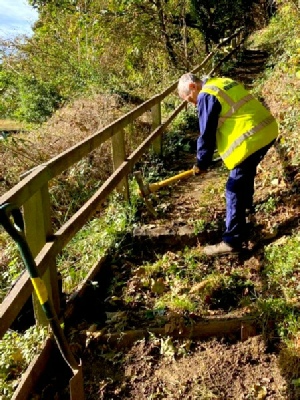
We focused our efforts on several maintenance and conservation tasks on the western side of the estuary today. First, the team repaired and secured the fencing along the high path to keep the route safe and sturdy for visitors. We also spent time clearing away fallen sticks and debris to keep the paths tidy.
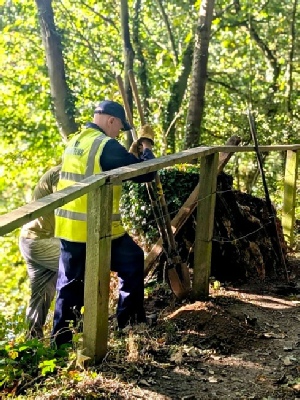
Photograph A. Securing the fencing along the high path
Photograph B. Clearing steps
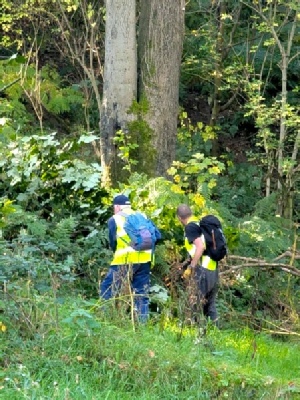
In addition to the path maintenance, we carried out some essential woodland management, focusing on sycamore control to manage invasive saplings and ivy control to prevent mature trees from being weighed down.
Photograph C. Controlling sycamores
Despite the sweltering and humid conditions, it was a fantastic, highly productive, and very enjoyable morning of hard graft!
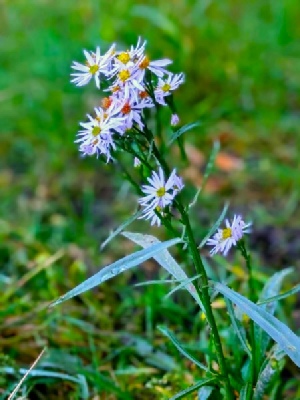
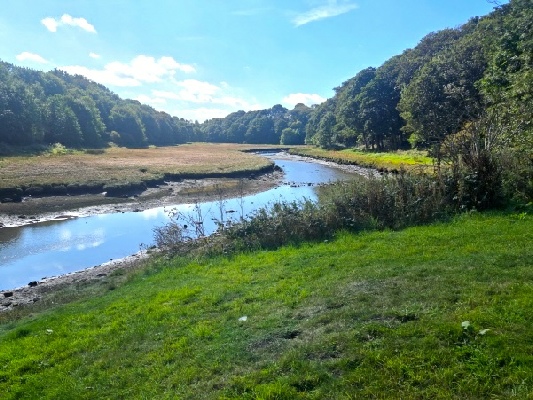
The estuary was looking gorgeous this morning, and must have looked even better a few weeks ago when the sea asters were blooming – they cover the salt marsh in late summer.
Photograph D. Sea aster
Photograph E. View of estuary
We’ll be back for more adventures next week!
| Flowers |
| Trees |
| Fauna |