






News Archive 2026 Jul-Sep
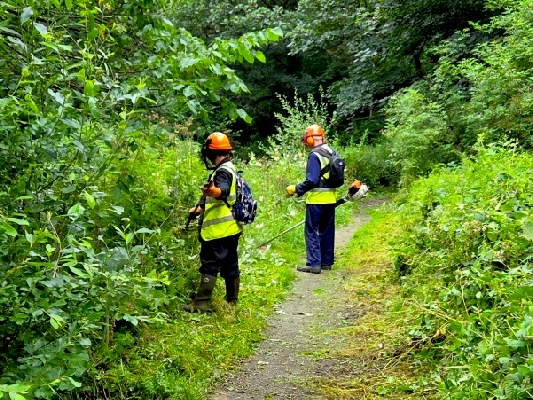
It was an overcast and close day (with a bit of drizzle) for the 10 volunteers of the Working Party this morning. The main activity as our old summer favourite: strimming.
We assembled at the metal gate on the Hartley West Farm access road and – after picking up four stimmers, a hedge trimmer and other tools – headed off for where we left off last week, which was a point below Hartley West Farm itself, where the top path descends to the riverside path. (We were working exclusively on the north side of the river this morning.)
As usual, we put one of our warning triangles on the path and started strimming. Each strimmer was accompanied by a raker. Four strimmer-operators and two rakers adds up to eight volunteers; the other two were tasked with trimming back the pathside shrubs and overhead branches.
The hedge-trimmer was in an awkward mood today and was hard to start. We were using it intermittently, and every time we restarted it, tere was a struggle. So, we tended to abandon it in the end and use loppers and secateurs instead.
The strimming itself went well. We did both the riverside and the high-level paths to Silverhill and beyond. It is always harder to strim the top-level path because it is more exposed to the sun, and the vegetation is growing like crazy at this time of the year, and is often up to head height.
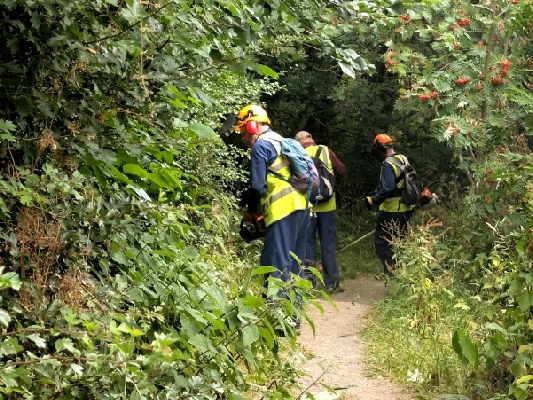
Photograph A. Part of the strimming and trimming team
Photograph B. Path after strimming
I think we disturbed a wasp’s nest during the session, which is always a summertime hazard, but nobody got stung – by a wasp, that is, but one of us got stung be a bee at a different location. We picked up litter as we went along, as usual. Quite a few ramblers, joggers and dog-walkes were out and about, so we carefully guided them past the strimmers to avoid problems.
Wildlife interest was suppressed by the noise of the strimmers, but we heard the swallows twittering overhead when we were having our refreshments. Someone reported a sighting of a kingfisher to one of our volunteers. Birdsong included song thrush, whitethroat, wren, etc. Several butterflies were seen.
By the time we got about level with the waterfall, we were getting a bit hot and tired so, having accomplished as much path clearing as we had intended, we trudged back to the van with our equipment and departed home for lunch.
Imagine what Holywell Dene would be like if we weren’t doing this work: the paths would be clogged with flopping vegetation and encroached by overhanging branches. So, enjoy the nice, clear path network in the Dene and remember: it doesn’t happen automatically!


A dedicated team of nine volunteers met up this morning to continue strimming the path verges. Compared to our recent sessions, it was a much cooler working environment today, with temperatures hovering around a comfortable 15°C—absolutely perfect conditions for a morning of physical work!
Our main focus for this session was maintaining the path network to ensure the trail remains clear and safe for visitors. We began our efforts at the stone bridge, working our way up the south side to the first wooden bridge.
From there, the team crossed over to the north side of the stream and headed upstream toward the second wooden bridge and beyond.
As usual we were strimming the path verges, trimming overhead branches and picking up any litter.
Photograph A. Strimming and raking
We are experiencing a summer drought this year, much as last year. This helps a bit with the strimming because the vegetation isn’t growing as fast or as high as normal. However, some wild creatures, such as blackbirds, are probably finding foraging hard in these conditions, and may be finding it hard to feed their young, with the ground so dry.
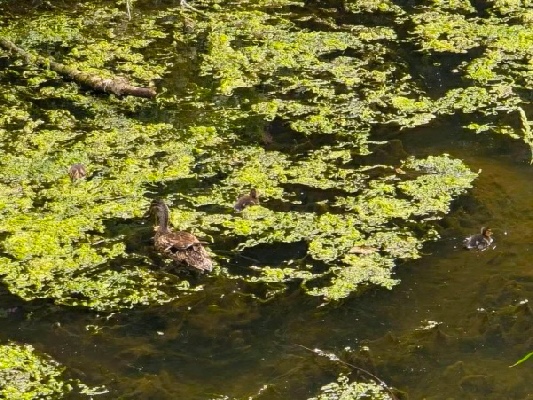
However this female mallard (see photo) won’t be having that problem. She has three chicks. Can you see them?
Photograph B. Mallard family
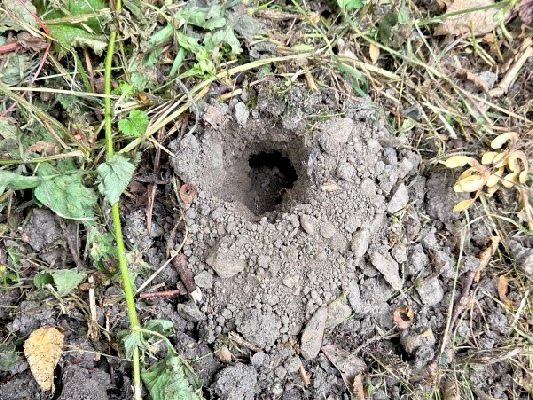
We keep coming across holes in the path. Here is one (see photo). Can you guess what created it? It’s difficult to find out without disturbing the creature living down there!
Photograph C. Hole!
A small but determined team of three volunteers turned out this morning for a special Friday balsam-bashing session. We started our efforts just east of the Holywell Road bridge, working our way downstream toward the section we reached last week.
It didn't take long for us to discover a massive infestation of Himalayan balsam on the private land adjacent to the equestrian area. This particular patch was far too large for us to tackle by hand, so we will need to return to this spot with strimmers to get it under control. Fortunately, we later met up with a representative from the Manor House and have agreed to tackle this area together, hopefully as early as next week!
Undeterred, we continued our way downstream, pulling up huge amounts of the invasive plants along the riverbank and reaching over the fence on the north side to clear the growth there.
On the plus side, we also took the time to check the side burn today and were very pleased to find only a small number of plants hiding out there. It's a fantastic result that shows our past efforts in that area are really paying off!
By the way, we also had a special session on Friday 10th July. We found and cleared a huge patch on the north bank just downstream from the Holywell side burn, which had been cleared last year. Overall only a handful were in flower and none with seeds – which is good.
Oh, and another thing: if you want to find out what Himalayan balsam looks like, take a look at the Himalayan Balsam Guide item in the Latest News on the home page of our website.
A group of nine volunteers met up at the cattle grid at Crowhall Farm, on Hartley Lane, for another busy morning of maintenance in the Dene. The weather was bright and comfortable for working, with temperatures around 18°C.
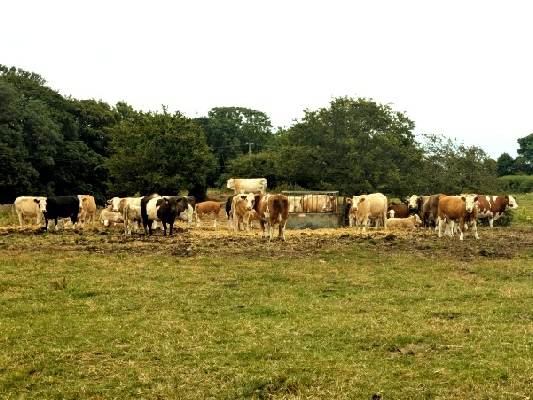
We had to cross the cattle field to the stile before we could start, but the cows were just relaxing in a group near the dried-up pond.
Photograph A. Cattle in field
Today, we focused our efforts on the upper path on the south side, working systematically from the upstream wooden bridge down to the downstream wooden bridge.
The team tackled a bit of everything to ensure the route remains safe and pleasant for everyone. We strimmed back the grass and vegetation creeping onto the paths, trimmed overhanging branches that were starting to get in the way of walkers, and carried out a general litter pick along the trail.
Photograph B. Strimming and cutting back overhanging branches near the bridge
Thanks to everyone's hard work, that entire stretch of the upper path is now beautifully clear and well-maintained!
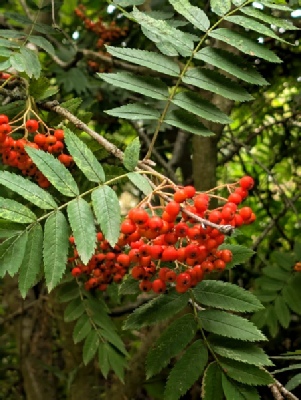
One of the features of the wildlife scene at this time of year is the rowan trees, with their clusters of brightly coloured berries – turning from orange to red (see photo). Also, yellowhammer and goldfinch (small birds), among other things, were heard singing – although the birdsong is shutting down now for the moulting season.
Photograph C. Rowan berries
A strong turnout of ten volunteers met up at the gas pumping station this morning for what turned out to be one of our tougher sessions of the year, with hot and balmy weather reaching 24°C!
To make the most of our numbers, we split into four separate teams—two dedicated to Himalayan balsam bashing and two taking on strimming duties.
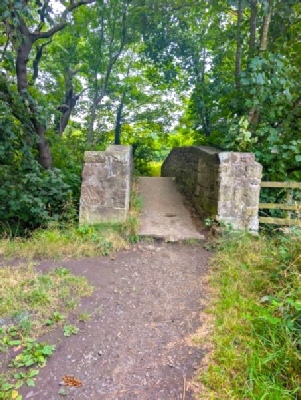
Our first balsam-bashing team started at the Holywell Road bridge and worked their way upstream toward the upstream tunnel. Meanwhile, the second team started at the “pack horse bridge” (the stone bridge near Kidnappers Path) and worked downstream. The two teams successfully met up at the upstream tunnel!
Photograph A. Packhorse bridge
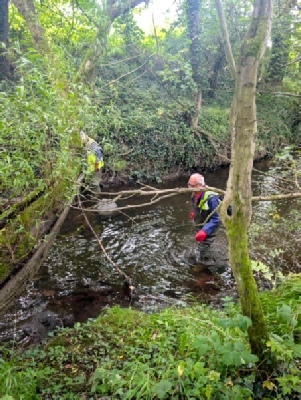
We didn’t come across any major colonies of balsam on this stretch, but there was a number of small patches and some individual plants – about 150 plants in all. We managed to collect a full black bag of seed heads to stop further spreading, and a black bag of rubbish pulled from the river.
Photograph B. Clearing Himalayan balsam and rubbish
During their trek along the river, the teams logged about six major blockages caused by fallen trees, debris, and accumulated rubbish. We will be planning a return session to tackle those in due course.
Photograph C. River blockage
Meanwhile, our two strimming teams were hard at work clearing the path from Dale Top at Holywell all the way up to the bridge below Concord House. They also spent time strimming carefully around the young oak saplings to give them room to thrive.
Along the north side of the burn, the team encountered a fallen tree obstructing the route, which our strimming crew managed to clear and push out of the way.
A huge effort from all ten volunteers today in some very warm conditions—everyone certainly earned a well-deserved rest after this one!
We’ll be back for more adventures next week!
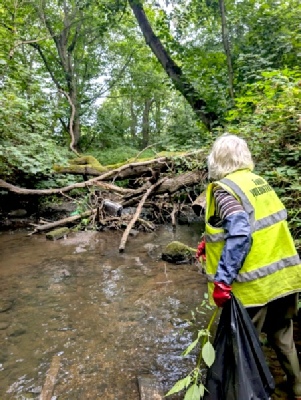
A dedicated team of nine volunteers met up at the Hartley Lane car park this morning, ready to take on the day's tasks despite a damp start at 19°C.
Unfortunately, the weather had other plans for us! The rain picked up so heavily that we eventually had to call the session off early for safety and comfort.
However, our hard-working team still managed to squeeze in a fantastic amount of progress before the downpour got the better of us.
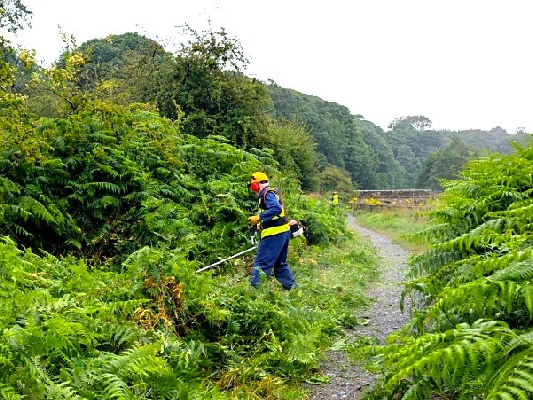
We successfully strimmed the main paths leading from the car park past the dipping pond all the way to the stile at the stone bridge. We also managed to clear the path heading out from the car park towards the estuary.
Photograph A. Strimming verges
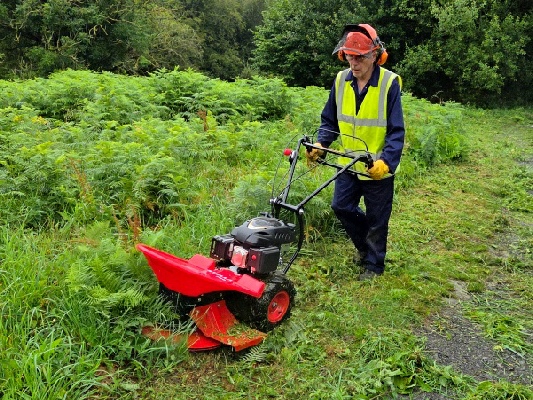
Oh, by the way, we have invested some of our funds in a new labour-saving device: a rough cutter. It is petrol-powered, is pushed like a lawnmower and will cut rough vegetation such as pathside weeds and bracken. Here it is in action.
Photograph B. Rough cutter in action
This will do some jobs quicker than a strimmer and will be useful particularly for area strimming and mowing the meadow.
A massive thank you to the nine brave souls who braved the wet weather today to keep the Dene’s paths clear!
We’ll be back for more adventures next week!
A team of five volunteers met up by the Suez plant in Seghill this morning for a productive few hours of conservation work on the old nature reserve. The weather was mild and comfortable for physical work at 16°C.
Photograph A. Himalayan balsam
Our main goal today was tackling an immense growth of Himalayan balsam across the reserve. Because the infestation was so heavy, we systematically picked off the seeding flower heads first to prevent them from scattering and bagged them up—filling an impressive five black bin bags! Once the seed heads were safely secured, we strimmed the ground thoroughly to catch all the smaller, non-flowering plants that are so easy to miss in the undergrowth.
Photograph B. Removing seed heads
Photograph C. Strimming
After finishing up on the reserve, we headed under the bridge and got into the water to clear another patch of balsam growing along the stream. While working down in the water, we spotted two plants that were heavily infested with aphids and guarded by a swarm of wasps! Exercising plenty of caution, we managed to navigate around them carefully and safely to complete the job.
Photograph D. Bags of balsam seed heads
It was a fantastic, highly productive session with great results for the reserve!
We’ll be back for more adventures on Tuesday!
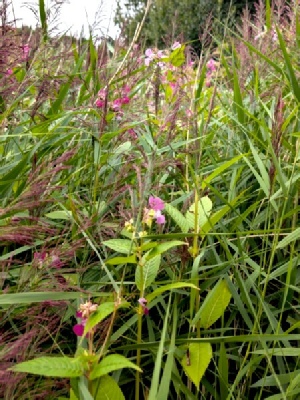
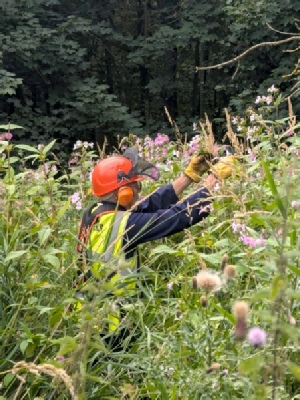
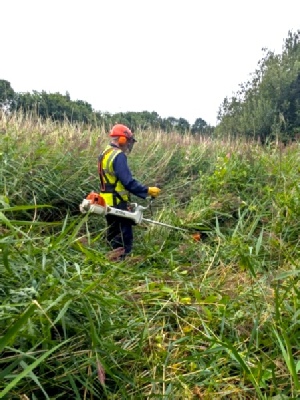
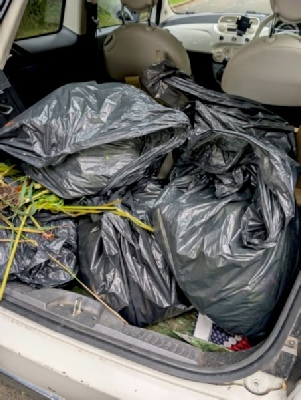
A great turnout of ten volunteers met up at the car park in Mare’s Close, Seghill, this morning for another highly productive session tackling Himalayan balsam. The weather was bright and warm, reaching 22°C.
To cover as much ground as possible, we split into two teams. The first team of four set out to tackle a massive infestation of at least 1,000 balsam plants on the Seaton Burn near Seghill. We initially attempted to reach them by wading through the burn, but that section turned out to be incredibly deep and unsafe to traverse.
Photograph A. Deep pool on burn
Thankfully, we were kindly granted permission to cross private land instead, allowing us to safely reach the site and clear the huge patch.
Photograph B. Tackling a huge patch of over 1,000 balsam plants
Meanwhile, the second group focused their efforts on the old Seghill Nature Reserve. They divided into two subgroups, one of which continued from where we left off last week, systematically pulling balsam on the west side of the lake. Meanwhile the other subgroup worked around the lake in the opposite direction, along the south side The two met up near the inlet culvert under the railway line.
Photograph C. Clearing balsam amongst tall lakeside vegetation
So, we’ve cleared the old nature reserve and part of the Seghill end of the Seaton Burn, but there’s still more to be done.
Thanks to the combined efforts of both teams—and the kind cooperation of local landowners—it was a fantastic and very productive day for the Dene!
We’ll be back for more adventures next week!
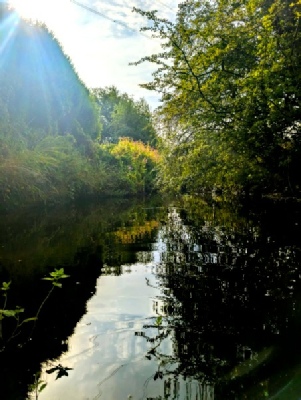
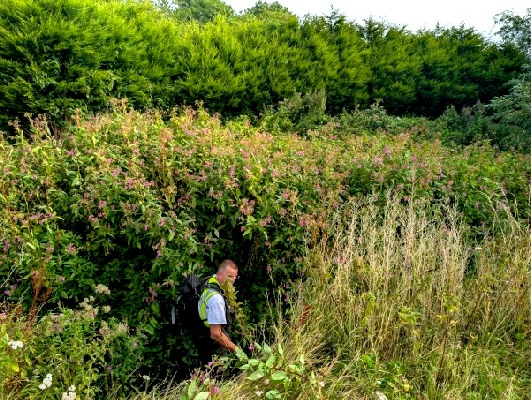
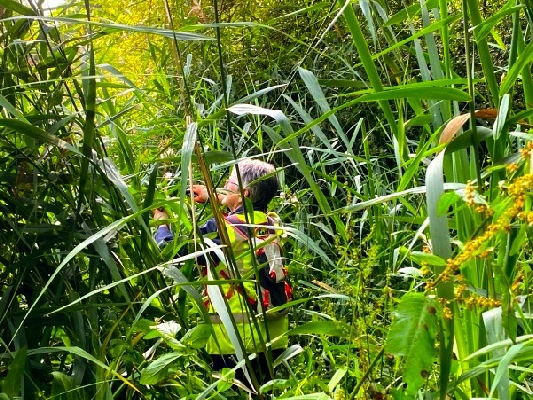
A small party of five volunteers met at the west end of Seaton Delaval for a morning of balsam bashing.
We split into two groups, the first group of three started at the “Newburgh Avenue” stone bridge working upstream. Meanwhile the second group walked up towards Seghill to where we finished last week, entered the water and worked downstream to meet the first group.
Both groups pulled a large number of plants, many in seed and some unfortunately already seeded, however in total a massive amount of seeds have been prevented from entering the watercourse.
The burn in that area is a big challenge to negotiate with many blockages, overhanging branches, massive vegetation growth and underwater obstructions, however the two groups eventually met up and we finished slightly early and headed home for a well earned rest.
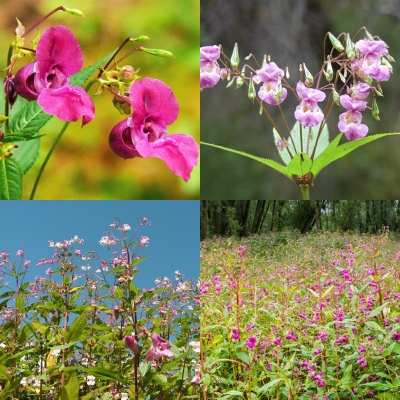
Just in case you want to know what Himalayan balsam looks like, here’s a composite illustration.
Photograph A. What Himalayan balsam looks like
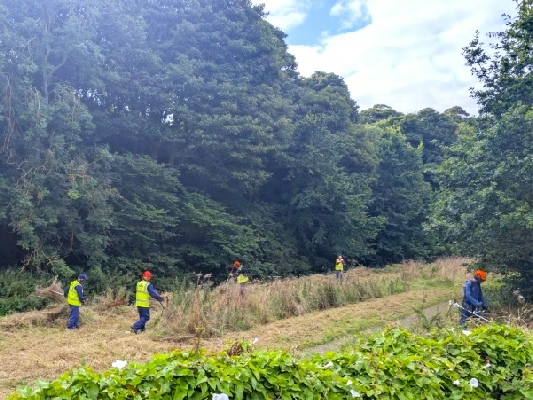
A strong team of ten volunteers met up by the gate on Hartley West Farm lane this morning, ready to take on one of our major seasonal jobs. The weather was pleasant and ideal for a full day of physical labor, with temperatures around 18°C.
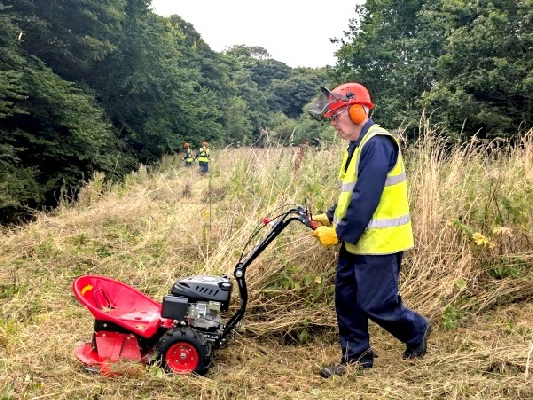
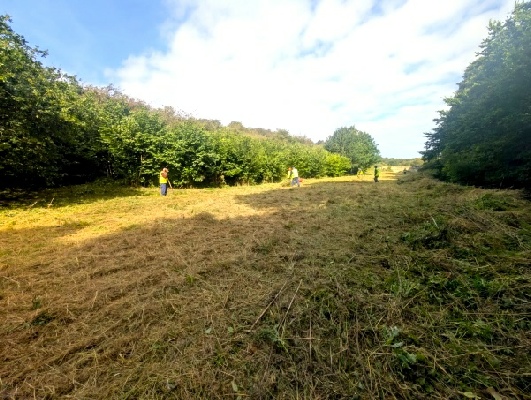
Our main focus for the entire day was strimming the meadow (near the stone bridge). Thanks to some new machinery we’ve recently acquired, the team was able to get stuck in and deliver a fantastic, high-quality result across the whole area.
Photograph A. Hard at work strimming the meadow
Photograph B. Strimming with our new machine
Because of the sheer volume of grass and vegetation cut down, we also had to reorganize our raking system on the fly to keep up with the new pace and handle the workload efficiently. It was a long, full-day effort, but the hard graft paid off, and the meadow is looking brilliant.
Photograph C. The meadow after mowing
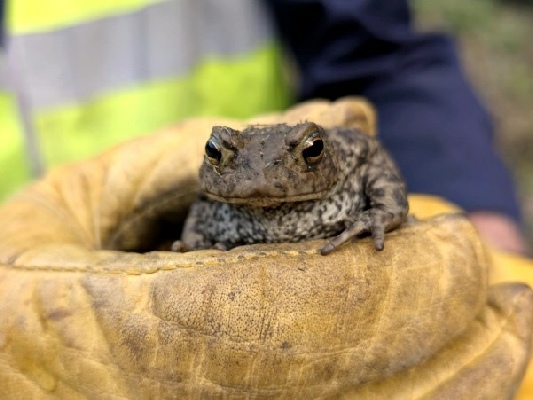
Every year, when we mow the meadow, we are made aware of the fact that lots of creatures enjoy living in the damp conditions between the grasses and weeds. Mice and other rodents are often seen scurrying away; also amphibians. Here is a toad that we encountered today (looking a bit indignant).
Photograph D. Common toad
A massive thank you to all ten volunteers who dedicated their entire day to getting this big job done so thoroughly!
We’ll be back for more adventures next week!
| Flowers |
| Trees |
| Fauna |
| Flowers |
| Trees |
| Fauna |